Ever Met an
Ugly Flower?
Flowers are everywhere. Our gender, sexuality, caste, class, religious and cultural beliefs — all influence how we look, touch, feel and perceive a flower.
We explore some of the universal tropes and values that have come to be associated with flowers; and we reflect on our gaze, attitudes and assumptions about flowers across various themes:
Commodification and labour; beauty and garden;
gender and creation; language and identity;
knowledge and colonisation; resistance and symbolism;
(in)visible and ephemeral archives of flowers.
So, have you ever met an ugly flower?
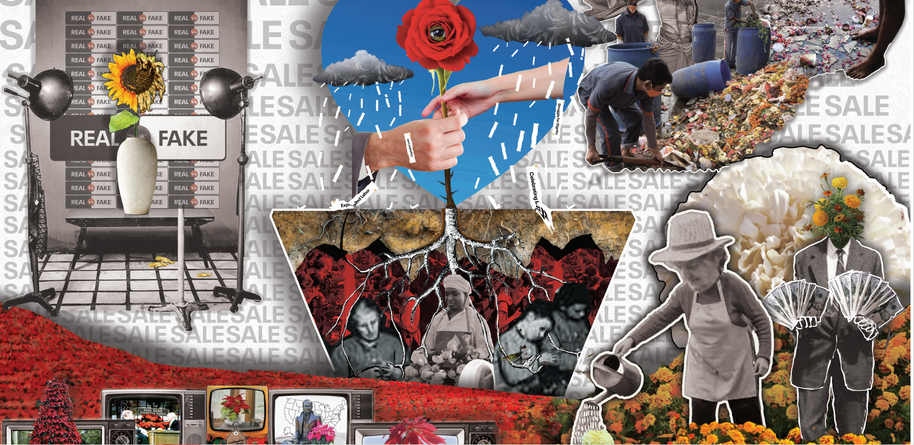

NOT FOR SALE
Flowers sell.
Women sell.
If we look closely at the constant likening of flowers to women,
We see how flowers and women face a similar fate.
Commodified in the name of beauty,
sexualised in the name of commodification,
beautified in the name of sexualisation.
The story (of flowers) cannot be told
without the story of the commodification of flowers.
Beauty on Duty
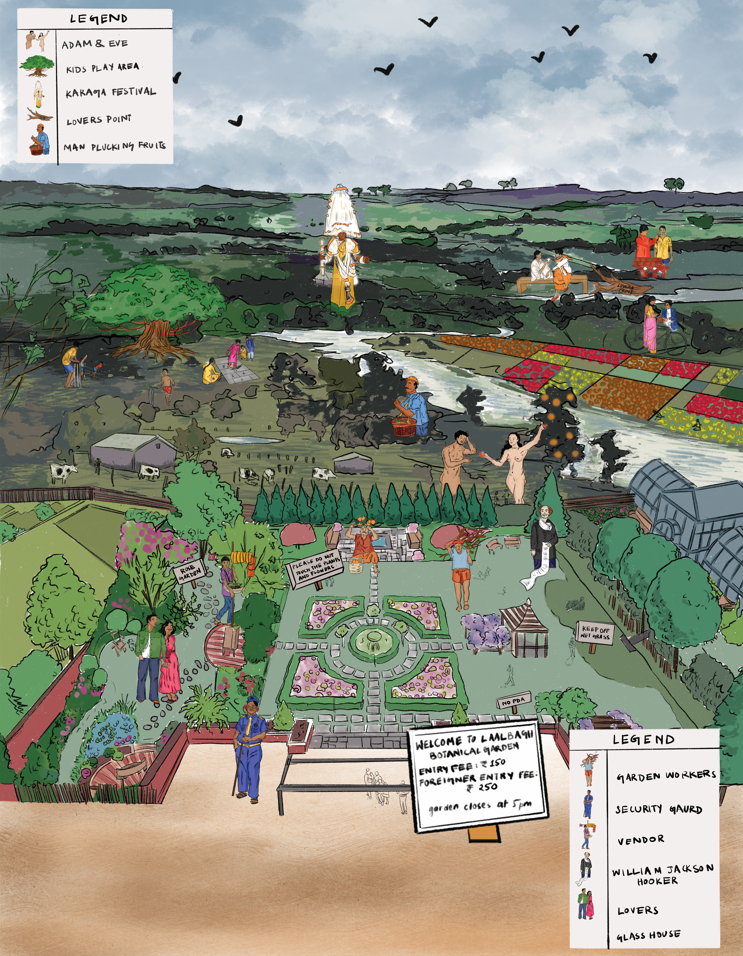
The colonial botanical garden was defined as a space for regulations, an act of controlling the wild and manicuring the landscape.
But the garden is also a site of desire and deviance.
How, then, do we
re-enter the garden,
as the locale of a gardening community’s knowledge and practice, a botanist’s lab, an herbalist’s loot, a visitor’s spectacle, a lover’s hideout, and a mural of different imaginations?

The Burden of Creation
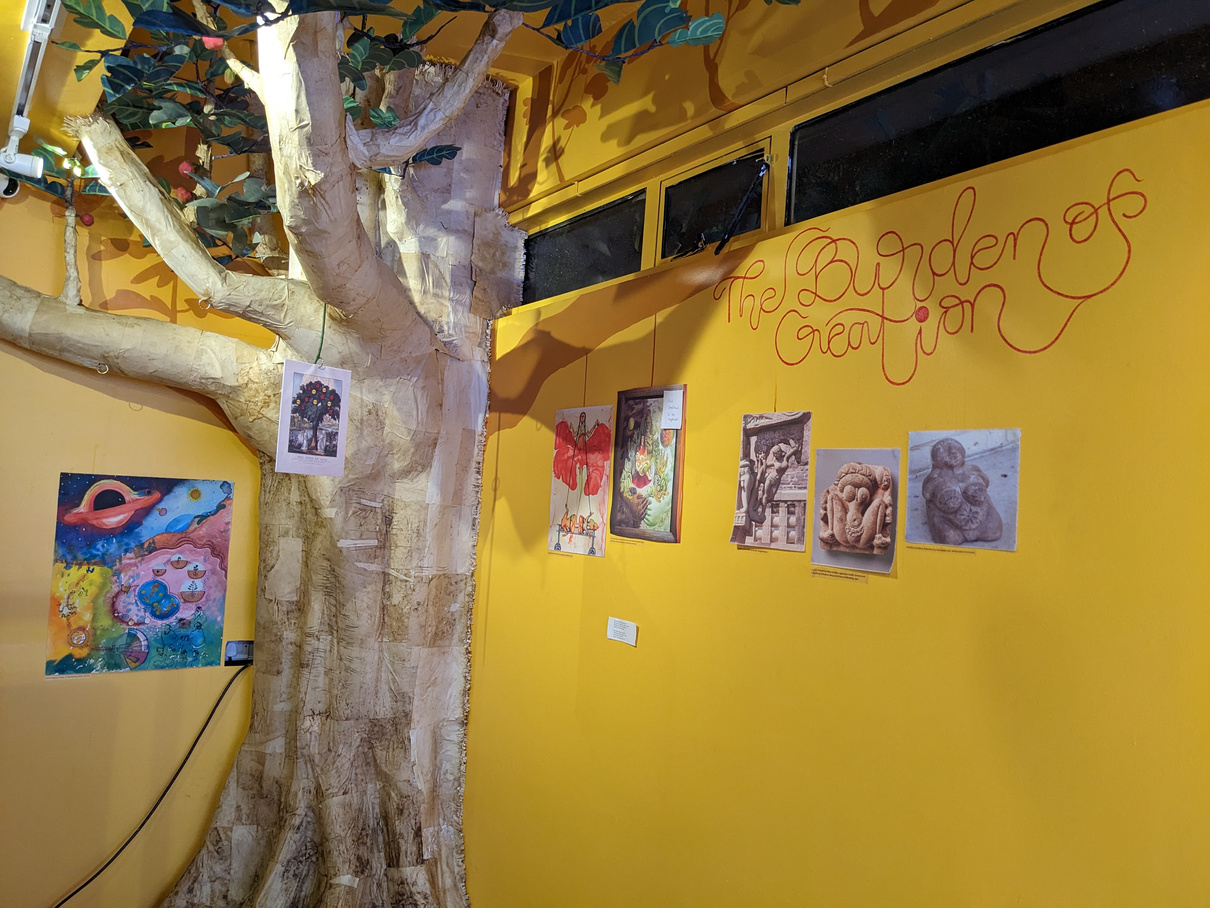
You see women and flowers fair,
With beauty, fragrance, softness, and flair.
Plucked with ease, for decoration,
Passive, in their estimation.
You create a religious mystery–
That governs what becomes of me,
Not me alone creates life
But now, I bear the burden of it.
In the Name of Science
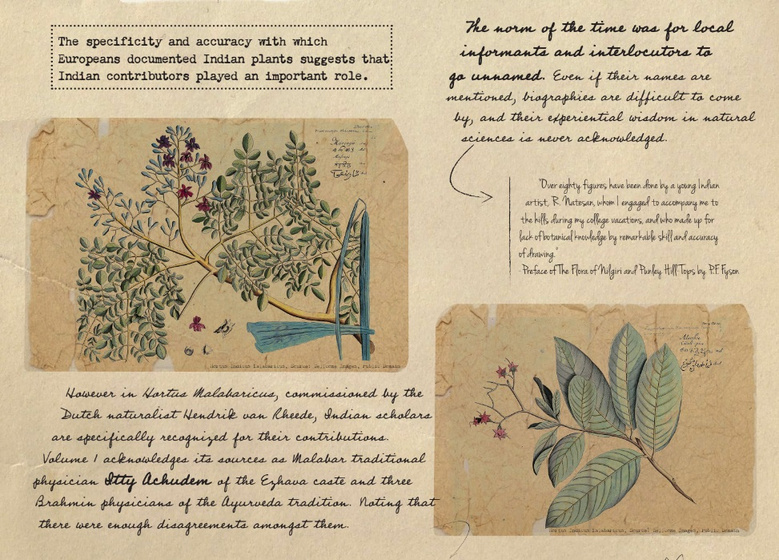
In exploring the gendered language in botanical sciences, we also encounter silences and omissions.
Science, as a site of knowledge, has been marked by instances of appropriation. It is built upon the labour and traditional ecological wisdom of those who remain anonymous in textbooks, archives, and libraries.
Here we look into complex histories that continue to shape our relationship to plants and flowers and remember the contributions that have been forgotten and invisibilized.

And Still, I Rose
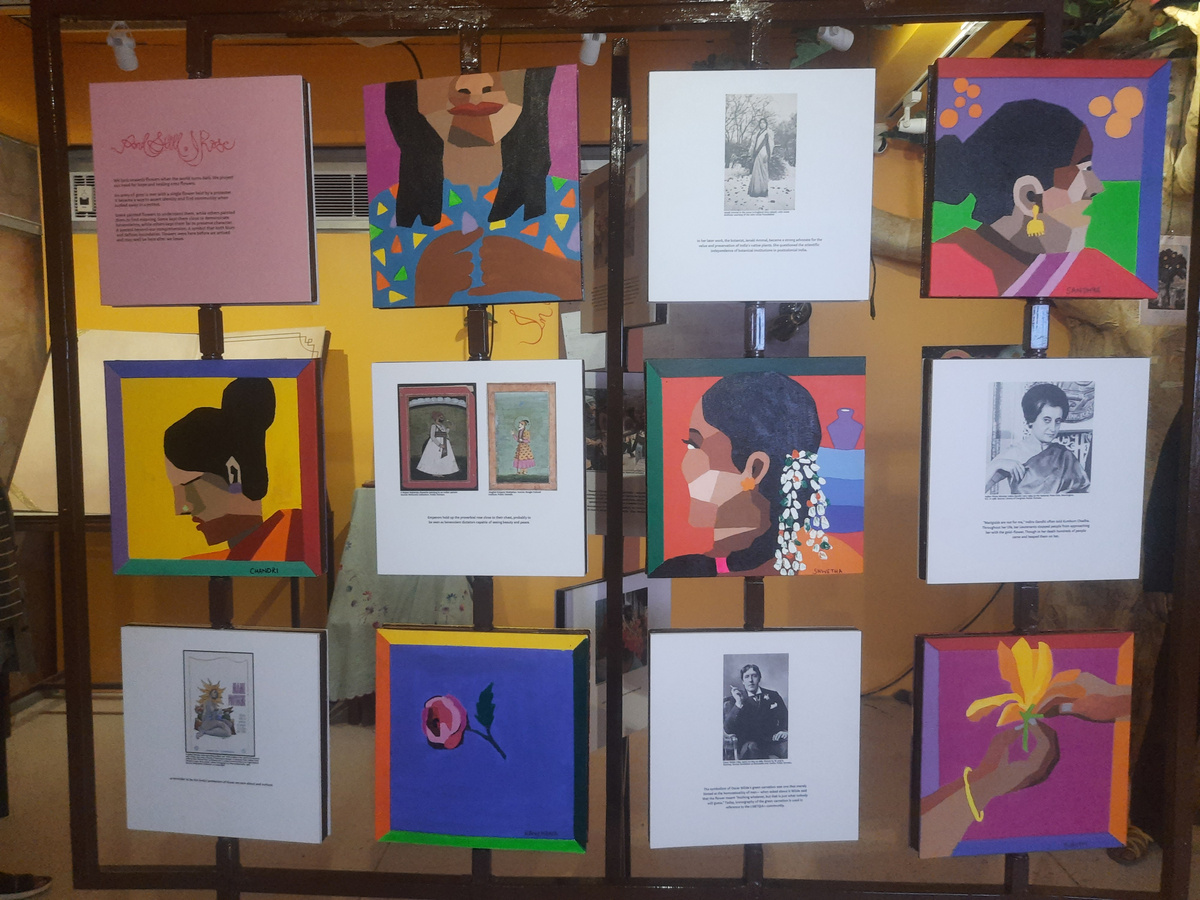
We look towards flowers when the world turns dark. We project our need for hope and healing onto flowers.
An army of guns is met with a single flower held by a protester. It became a way to assert identity and find community when tucked away in a pocket.
Some painted flowers to understand them, while others painted them to find meaning. Some kept them close to demonstrate benevolence, while others kept them far to preserve character. A symbol beyond our comprehension. A symbol that both blurs and defines boundaries. Flowers were here before we arrived and may well be here after we leave.